
Skin Self-Exam: How to Check Moles at Home
How To Track a Mole Over Time Without Guessing
Tracking a mole is most useful when the photos, notes, and timing are consistent enough to show what actually changed.
Quick answer
Use consistent lighting, one clear close photo, one wider location photo, and short notes about symptoms and timing. The goal is not more photos. It is better comparison.
Start a photo timeline while the details are fresh
A calm tracking routine works best when the first photo, date, and symptom note are saved right away. Dermela keeps those comparisons organized. Educational tracking, not a diagnosis.
Open the Mole Checker app page · Download Dermela on the App Store
What makes a tracking photo useful
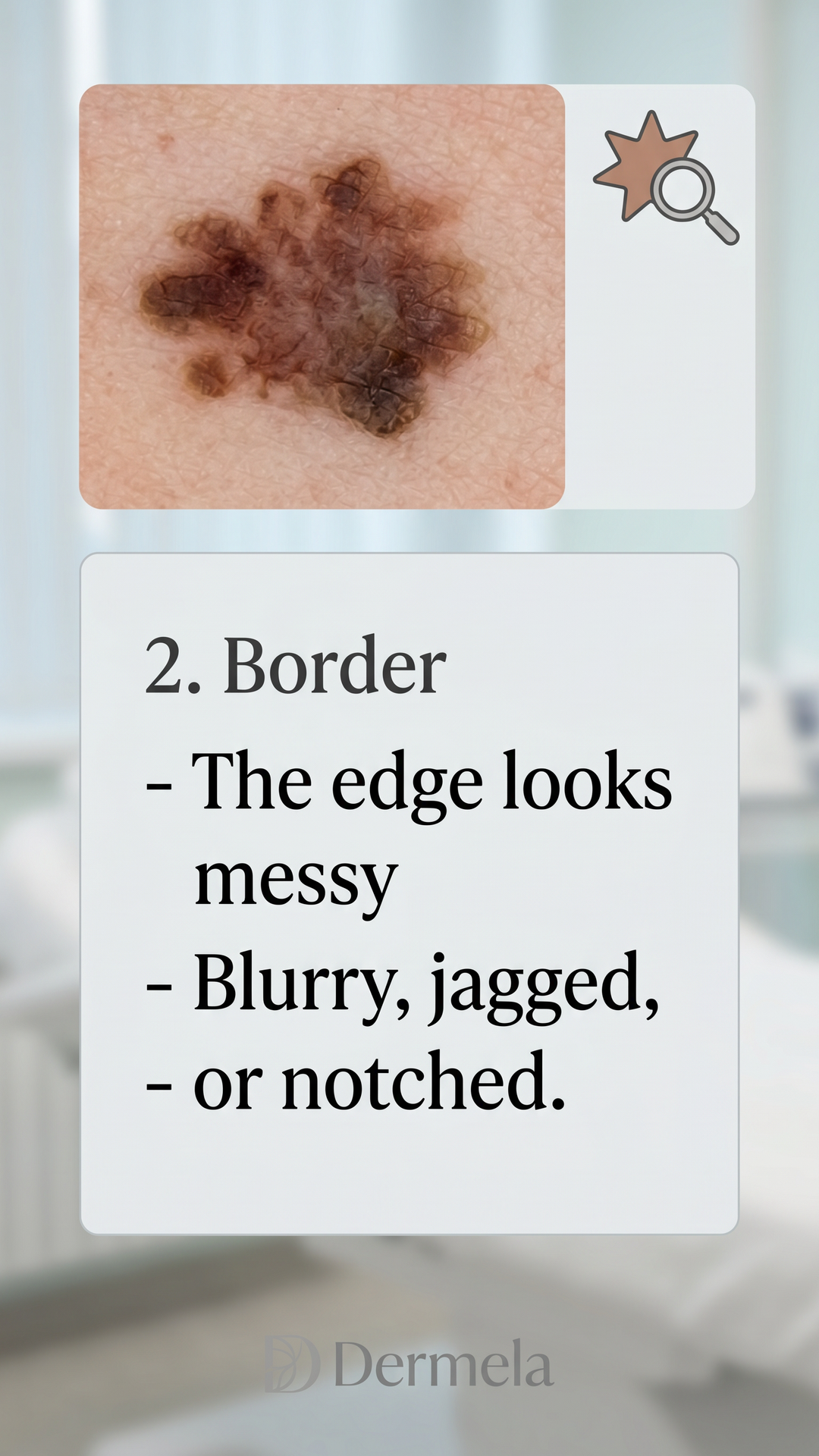
A useful tracking photo is consistent enough to compare, not just sharp enough to admire. The best routine is one close photo of the spot and one wider photo that shows where it sits on the body. Try to keep the angle, lighting, and distance similar. Otherwise you may confuse camera differences with skin change.
What notes matter more than image count
A short note about itching, bleeding, tenderness, crusting, or a new trigger can make the timeline much more informative. Those symptoms often provide context that a photo alone cannot capture. Dates matter too. 'I noticed this three weeks ago and it has looked darker since last Friday' is much more useful than 'it changed at some point.'
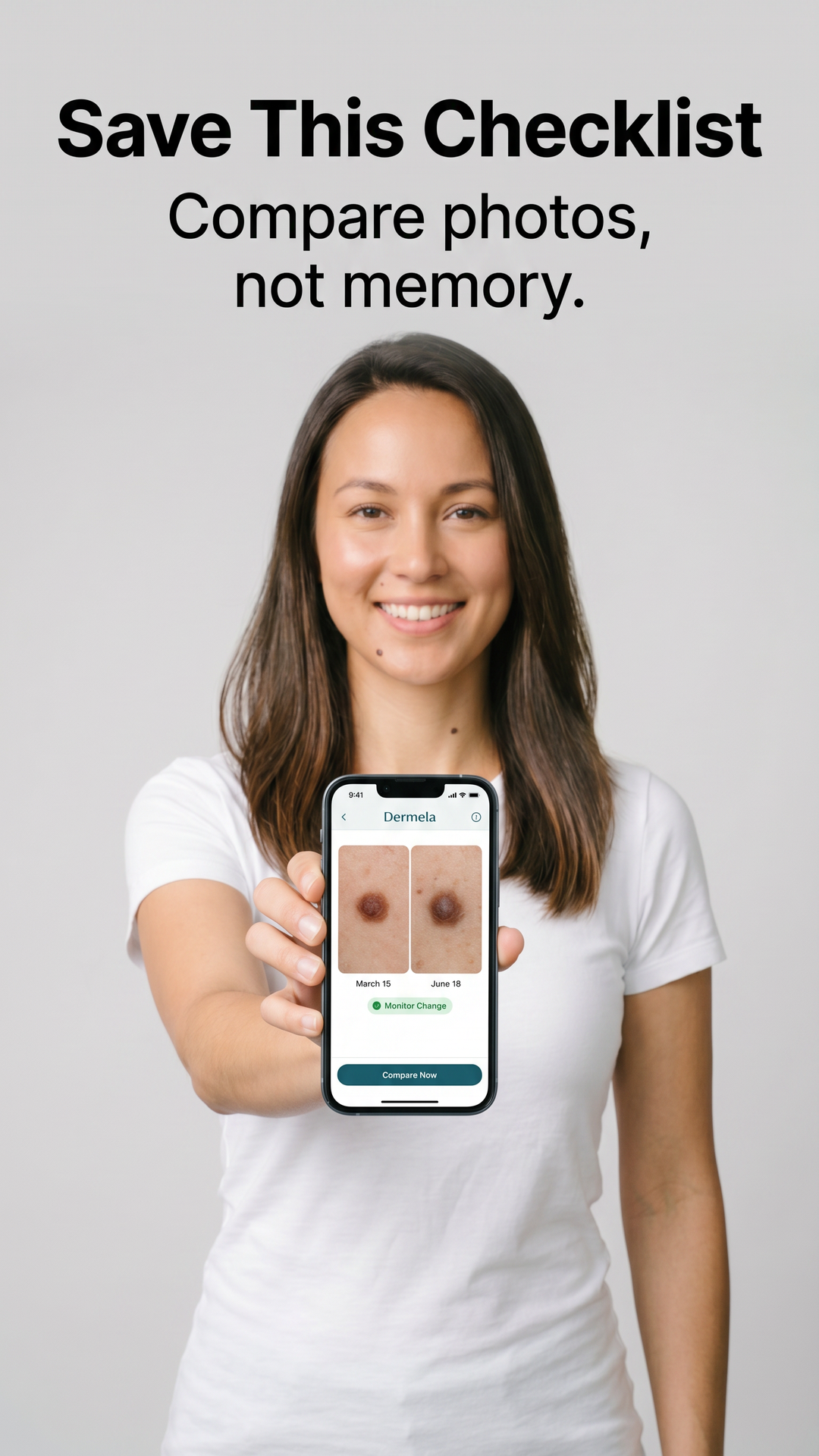
Turn one photo into a useful timeline
Add reminders, repeat the same angle, and keep short notes about change so the next comparison is easier to trust. Educational tracking, not a diagnosis.
Open the Mole Checker app page · Download Dermela on the App Store
How Dermela fits into the routine
Dermela is designed to keep those comparisons organized in one place so you can see whether a concern is actually evolving. It is most helpful as a structured log, not as a substitute for a clinician's judgment. If a spot is rapidly changing, painful, bleeding, or highly unusual, use the timeline as context and arrange a professional review promptly.
When to get medical help
Arrange a medical review promptly if the spot is changing, bleeding, painful, crusting, growing quickly, or clearly different from your usual pattern.
How Dermela helps
Dermela helps you keep a clear photo timeline, symptom notes, and comparison history so you can describe what changed more clearly. Track changes in Dermela.
Medical disclaimer
Dermela is for education and tracking support only. It is not medical advice, does not diagnose melanoma or skin cancer, and does not replace a qualified clinician.
FAQs
How often should I re-photograph the same mole?
That depends on the situation, but consistency matters more than over-photographing. Repeating the same comparison method is the key benefit.
Should I use filters or editing?
No. Edited images make change harder to interpret and can make a timeline less reliable.
Related reading
Track the next change clearly
Dermela keeps mole photos, notes, and symptoms organized in a timeline you can bring to a clinician.
References
- [3] Find skin cancer: How to perform a skin self-exam, American Academy of Dermatology.
- [2] Signs and Symptoms of Melanoma Skin Cancer, American Cancer Society.
Written by
Dermela Editorial Team
Health technology editorial team
Dermela's editorial team writes patient-friendly skin tracking education and cites dermatology and cancer authority sources.
Medical reviewer pending
Board-certified dermatologist credentials required before publishing reviewer claims
License: License number pending. Reviewer details must be replaced with verified credentials before publishing reviewer claims.
Last reviewed: May 26, 2026
Related articles
Skin Self-Exam: How to Check Moles at Home
Learn a step-by-step skin self-exam routine, what areas people miss, and how to photograph moles for better tracking.
When Should You Get a Mole Checked? What to Expect
Learn when to get a mole checked, what changes matter, and how to prepare photos and notes before a dermatologist or doctor visit.
Mole Checker App vs. Seeing a Dermatologist: What's the Difference?
Understand what a mole checker app can support, what only a dermatologist or doctor can do, and how to use Dermela safely.