
Types of Moles
Raised Mole vs Flat Mole: What Shape Change Can Mean
A raised mole is not automatically dangerous, but a spot that becomes more elevated or changes surface texture deserves better tracking.
Quick answer
Some normal moles are flat and some are raised. The concern is not elevation alone, but a clear change in height, texture, border, color, or symptoms.
Keep a clear record for Raised Mole vs Flat Mole: What Shape Change Can Mean
Save a dated photo and a short note while the details are still fresh so your next comparison is easier to trust. Educational tracking, not a diagnosis.
Open the Mole Checker app page · Download Dermela on the App Store
Why elevation alone is not enough
People often worry as soon as a mole feels raised, but some normal moles have always been elevated. The better question is whether the elevation is new or whether the surface texture has changed. A smooth raised spot that has looked the same for years is a different situation from a spot that recently became thicker, crustier, or more irregular.
What kind of shape change matters
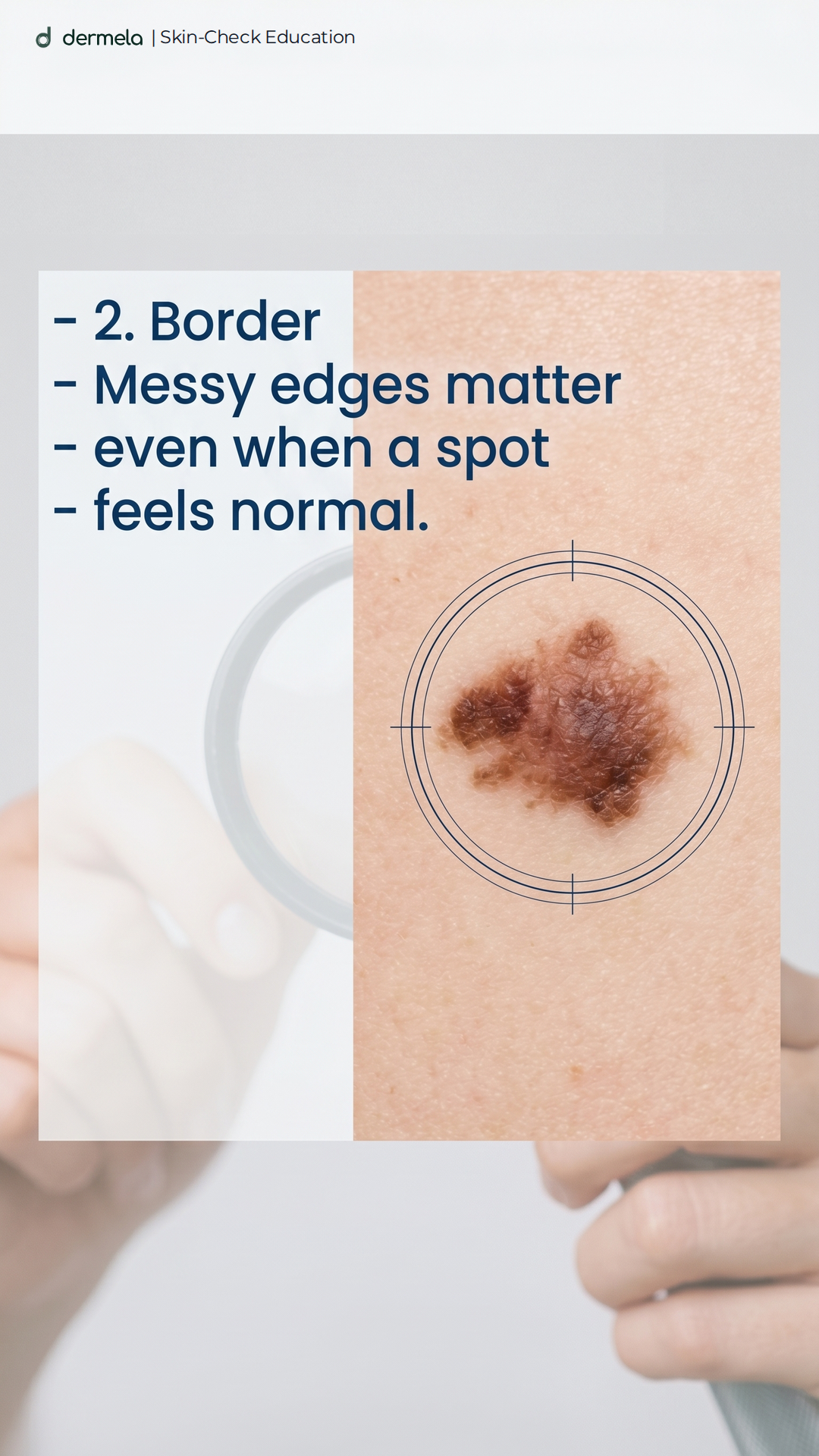
Document whether the spot now casts a different shadow, feels rough, or looks more asymmetric than before. If the border is changing along with the elevation, the need for professional review is stronger. Texture change is especially worth noting because it is easy to forget the timeline once a spot has already changed.

Turn concern into a usable timeline
Photos, notes, and timing are easier to review when they stay together instead of living in your camera roll and memory. Educational tracking, not a diagnosis.
Open the Mole Checker app page · Download Dermela on the App Store
How to track the surface clearly
Take one straight-on photo and one angled photo in the same lighting. The angled view often shows whether a spot is becoming more raised or irregular over time. Dermela is most useful here as a comparison log. It cannot diagnose a changing spot, but it can make the change easier to show and discuss.
When to get medical help
Arrange a medical review promptly if the spot is changing, bleeding, painful, crusting, growing quickly, or clearly different from your usual pattern.
How Dermela helps
Dermela helps you keep a clear photo timeline, symptom notes, and comparison history so you can describe what changed more clearly. Track changes in Dermela.
Medical disclaimer
Dermela is for education and tracking support only. It is not medical advice, does not diagnose melanoma or skin cancer, and does not replace a qualified clinician.
FAQs
Can a normal mole become raised with age?
Some moles change gradually over time, but any noticeable new change in shape, texture, or color is worth documenting and reviewing with a clinician.
Does a raised mole always need removal?
No. Removal decisions depend on the overall clinical picture, including change, symptoms, appearance, and exam findings.
Related reading
Track the next change clearly
Dermela keeps mole photos, notes, and symptoms organized in a timeline you can bring to a clinician.
References
- [1] What to look for: ABCDEs of melanoma, American Academy of Dermatology.
- [4] Moles, Mayo Clinic.
Written by
Dermela Editorial Team
Health technology editorial team
Dermela's editorial team writes patient-friendly skin tracking education and cites dermatology and cancer authority sources.
Medical reviewer pending
Board-certified dermatologist credentials required before publishing reviewer claims
License: License number pending. Reviewer details must be replaced with verified credentials before publishing reviewer claims.
Last reviewed: May 30, 2026
Related articles
Types of Moles
A practical guide to normal moles, atypical moles, congenital nevi, halo nevi, blue nevi, and when changes need medical review.
Mole Color Changes: What Different Colors Can Mean
Learn when mole color changes deserve attention, including mixed colors, new darkening, red or white areas, and pigment spread.
When Should You Get a Mole Checked? What to Expect
Learn when to get a mole checked, what changes matter, and how to prepare photos and notes before a dermatologist or doctor visit.